

At Makola Market in Accra, a fabric seller confirms a sale the way millions of Ghanaians do. A customer sends a WhatsApp photo of the cloth, a mobile money payment follows, and a delivery rider sets off.
The whole transaction lives in two apps on one phone. For a growing business, that is exactly where choosing CRM software Ghana teams will actually use begins.
The phone works until the business grows past one person. Then nobody can see which customer paid, which order is late or which lead went cold.
This guide covers the options and what they cost in cedis. It also explains why mobile money matters and which data protection rules the regulator now enforces.
Key takeaways
- Zoho, HubSpot and Salesforce all sell in Ghana, but bill in foreign currency. Budget with a dated cedi rate.
- Mobile money is the payment rail. A CRM that cannot see MoMo payments will always be half blind.
- WhatsApp is where Ghanaian customers start conversations, so the CRM should capture those chats.
- Data controllers must register with the Data Protection Commission before processing personal data under Act 843.
- The Commission began spot checks on 5 October 2026, so registration is now a practical question.
Why do Ghanaian businesses need a CRM now?
Ghana’s business base is growing fast. The Ghana Statistical Service counted about 1.87 million businesses in its 2024 establishment survey, according to the Daily Graphic. Micro-enterprises made up 90.4% of them.
Customers are online. DataReportal’s Digital 2026 Ghana report counts 26.3 million internet users at the end of 2025, or 74.6% of the population. It lists 41.8 million mobile connections.
Money moves on phones too. Bank of Ghana data shows GH₵492.9 billion in mobile money transactions in June 2026 alone, the Ghana News Agency reported. Ghana had 26.4 million active mobile money accounts.
So the sales conversation happens on WhatsApp and the payment on MoMo. A spreadsheet updated on Friday cannot keep up with either.
Which CRM software Ghana SMEs should shortlist?
Three international platforms make a sensible starting shortlist. Each fits a different stage.
- Zoho CRM suits cost-conscious SMEs that want CRM, invoicing and support from one vendor.
- HubSpot suits marketing-led businesses, including those selling to the UK or US.
- Salesforce suits banks, insurers, telcos and large distributors with complex processes and many users.
Local tools and custom builds exist too. They can work, but check how they handle data protection, backups and integrations before you commit.
How much does CRM software cost in cedis?
None of the three bills in cedis on its public price lists.
The table converts published dollar prices at GH₵11.71. That was the Bank of Ghana interbank selling rate on 14 October 2026, reported by Modern Ghana.
Prices are as of October 2026, per user per month, before tax. For scale, five users on Zoho Standard come to about GH₵9,840 a year at that rate.
| Plan | USD | Indicative GH₵ |
|---|---|---|
| Zoho CRM Standard (annual billing) | $14 | about GH₵164 |
| Zoho CRM Professional (annual billing) | $23 | about GH₵269 |
| HubSpot Starter Customer Platform (regular price) | $20 | about GH₵234 |
| HubSpot Sales Hub Professional (annual), plus $1,500 onboarding | $90 | about GH₵1,054 |
| Salesforce Starter Suite | $25 | about GH₵293 |
| Salesforce Pro Suite (annual contract) | $100 | about GH₵1,171 |
Sources: Zoho’s edition comparison, HubSpot’s Starter page and Sales Hub pricing guide, and Salesforce’s small business pricing.
Zoho and HubSpot both offer free tiers: up to three users on Zoho and two on HubSpot’s free tools. Forex bureaus sold dollars at GH₵12.30 on the same day. Card payments may therefore cost more than the interbank figures suggest.
Does your CRM need mobile money integration?
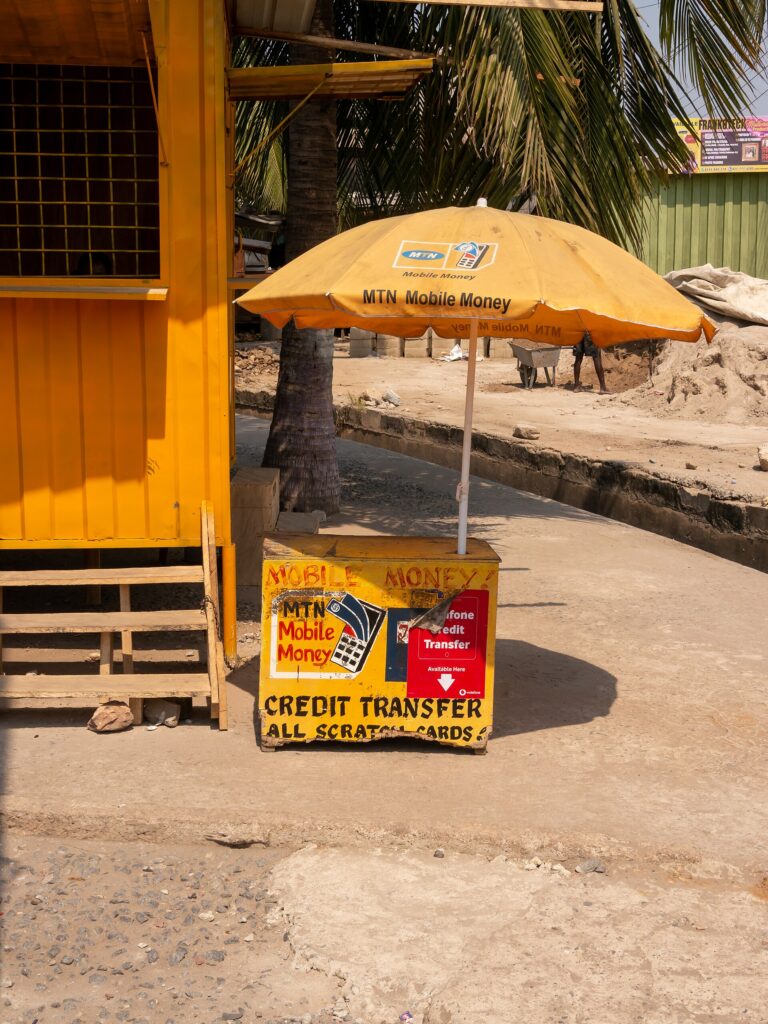
For most Ghanaian SMEs, yes. If finance confirms MoMo payments from a phone and tells sales by WhatsApp, the CRM never knows who paid.
Paystack supports mobile money in Ghana through MTN, AirtelTigo and Telecel. That gives CRMs a route to MoMo, even though none of the three platforms collects MoMo natively.
The routes differ by platform:
- Zoho: Paystack offers an extension for Zoho Books covering Ghana. Invoices mark themselves paid when customers pay.
- HubSpot: HubSpot Payments works only in the US, the UK and Canada. Ghanaian firms usually connect Paystack through an automation tool such as Zapier.
- Salesforce: payment integration is typically a custom or partner-built project.
Whichever route you choose, the goal is the same. A paid order should update the customer record automatically, without anyone retyping it.
How should the CRM handle WhatsApp-first customers?
Ghanaian buyers often start with a WhatsApp message, not a web form. The CRM should capture that chat against the customer.
Zoho supports WhatsApp in all paid CRM editions. HubSpot’s WhatsApp inbox needs a Professional or Enterprise Marketing or Service Hub.
Meta charges per message by country. The compilations we checked do not list Ghana as its own market.
FlowCall lists Meta’s “Rest of Africa” group at about $0.0225 per marketing message from 1 October 2026. Utility and service messages cost about $0.004. Confirm Ghana’s group on your own rate card.
What does Ghana’s data protection law require?
Many SMEs carry risk here without knowing it. Ghana’s Data Protection Act, 2012 (Act 843) requires data controllers to register with the Data Protection Commission. They must do so before processing personal data.
Controllers must renew every two years, and processing without registration is an offence. Those rules sit in sections 27, 50 and 56 of the Act.
The Act also gives customers rights that a CRM must respect. Section 40 lets individuals opt out of direct marketing. Section 33 covers correcting or deleting inaccurate data.
Enforcement is no longer theoretical. The Commission began spot checks on 5 October 2026, targeting organisations that had not registered. It registered 2,575 data controllers in 2026, the Ghana News Agency reported.
Executive Director Dr Arnold Kavaarpuo said the Commission would no longer rely solely on persuasion where organisations fail to comply. Its old registration site now points to a new domain, dpc.gov.gh, and we could not verify current registration fees there. Check fees directly with the Commission.

What should you ask before buying CRM software Ghana vendors offer?
A short list of questions saves months of regret. Put them to every vendor and partner.
- Which currency will you invoice in, and at what exchange rate?
- How will a MoMo payment reach the customer record?
- Can WhatsApp chats sit on the customer record, and who pays for messages?
- Where will customer data be stored, and how will you support our DPC obligations?
- Can we export all our data if we leave?
- Who trains our staff, and in which city?
Good CRM software Ghana teams can grow into will have clear answers to all six. Vague answers on payments or data protection are a warning sign.
What do Accra and Kumasi businesses need from a CRM?
Ghana is not one market, even within its two biggest cities.
In Accra, service firms, distributors and online retailers often sell across WhatsApp, Instagram and corporate tenders. They need pipelines, quotes and clean records for the DPC.
In Kumasi, many trading businesses around Kejetia and Adum run on relationships, credit and repeat orders. For them, a CRM that tracks balances, reorder dates and MoMo payments matters more than marketing automation.
Digital payments are spreading unevenly. The 2024 establishment survey found digital payment adoption of 50.9% among Greater Accra businesses, according to the same Graphic report. Firms elsewhere may need a CRM that handles cash and MoMo side by side.
What does local implementation support look like?
Zoho, HubSpot and Salesforce all deliver much of their implementation work through partner networks. A good partner should know Act 843, MoMo payment flows and the WhatsApp Business Platform, not just the CRM screens.
Ask partners for a written scope covering data migration, DPC-aligned consent fields, MoMo integration and training. Riophany works with firms in Ghana, Nigeria, Kenya and the UK. Our CRM team can review a scope with you.
If customer history keeps disappearing when staff leave, our piece on sales handovers covers the pattern.
How long before a team sees results?
Expect the first useful signals within weeks, not months. Faster replies and fewer forgotten follow-ups show up early if leaders use the CRM in sales meetings.
Revenue effects take longer. A quarter of clean data usually shows which channels bring paying customers and which agents convert.
Set three or four measures at the start, such as reply time, follow-ups completed and MoMo payments matched to orders. Review them weekly, and the value of the CRM software Ghana managers chose becomes visible in their own numbers.
The right CRM software Ghana firms choose is the one that fits WhatsApp, MoMo and the DPC’s rules at once. In Ghana, the customer relationship already lives on the phone. The CRM’s job is to make sure the business, and not just the phone, remembers it.
Frequently asked questions
What is the best CRM software in Ghana?
It depends on size and needs. Zoho suits cost-conscious SMEs, HubSpot suits marketing-led firms, and Salesforce suits large, complex organisations.
How much does CRM software cost in Ghana?
Published prices start around $14 to $25 per user per month, about GH₵164 to GH₵293 at mid-October 2026 interbank rates. Free tiers exist for very small teams.
Can a CRM accept mobile money payments?
Not natively, but Paystack supports MTN, AirtelTigo and Telecel MoMo in Ghana. It connects to Zoho Books directly and to HubSpot through Zapier.
Do I need to register with the Data Protection Commission?
Act 843 requires data controllers to register before processing personal data and to renew every two years. The Commission began spot checks in October 2026.
Does the CRM need WhatsApp integration?
For most Ghanaian SMEs, yes. Customers often start on WhatsApp, and Meta charges businesses per message.