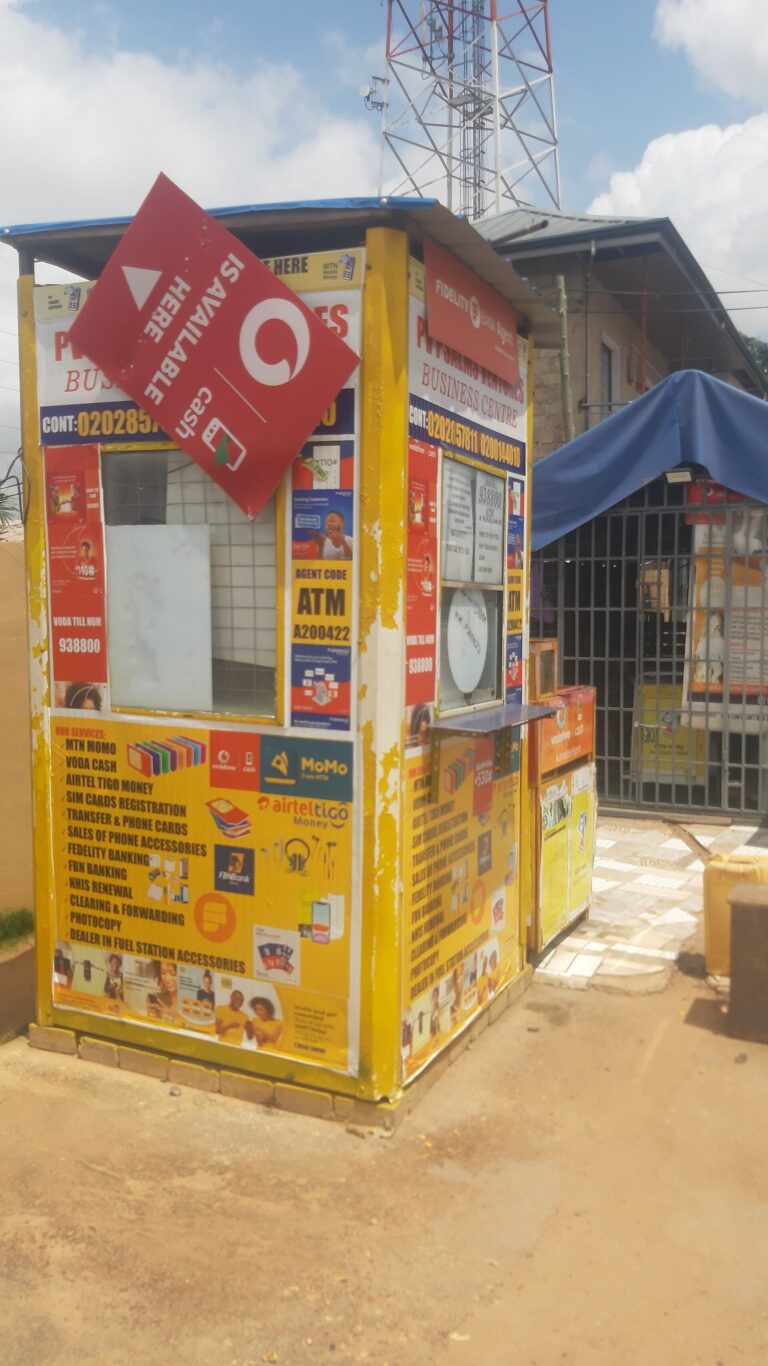

Consider a familiar scene inside a growing retail business in Lagos.
A new Instagram campaign goes live in the morning. Before midday, customers are asking questions on WhatsApp.
One woman wants to know whether the company delivers to Ibadan. A hotel manager requests prices for a bulk order. Another customer sends a photograph and asks whether the product is available in a different colour.
The advertising dashboard looks encouraging. People are seeing the campaign, clicking the advert and starting conversations.
Behind the screen, the work is less organised.
Two employees are replying from separate phones. Someone promises to confirm a delivery charge but forgets. The hotel enquiry is forwarded to a manager who is attending a meeting. A customer who says she will buy at the end of the month is never contacted again.
The advert did its job.
The business did not finish it.
This is an expensive problem because it can remain hidden inside positive marketing figures. A campaign may record strong reach, a reasonable cost per click and dozens of enquiries while producing far fewer sales than it should.
The marketing team sees demand. The business experiences weak revenue.
Both results can be true.
The click is not the customer journey
Nigeria had 109 million internet users at the end of 2025 and 47.8 million social media user identities in October that year, according to DataReportal.
Businesses are spending money to reach that audience through Google, Instagram, Facebook and other digital channels. Meta also allows companies to run advertisements that open WhatsApp conversations, reducing the distance between seeing a product and contacting the seller.
But making contact easier does not guarantee that the conversation will be handled properly.
The customer still needs to be identified. The enquiry must be recorded. Someone has to take responsibility for it. Questions must be answered, promises remembered and follow-up completed.
If those steps depend on screenshots, personal phones and human memory, more advertising can create more confusion rather than more revenue.
Where customer follow-up breaks
Customer follow-up usually fails in five connected places.
1. The enquiry is never properly captured
A customer clicks an advert and sends a WhatsApp message. An employee replies, but no record enters the company’s CRM or sales system.
If the customer does not buy immediately, the conversation gradually moves down the WhatsApp screen. Within days, it may be buried beneath newer enquiries.
The company paid to attract the customer but created no dependable way to continue the relationship.
2. The customer loses their identity between channels
The same person may first appear as an Instagram username, then as a telephone number on WhatsApp and later as a bank transfer reference.
When those details are not connected, the business may treat one customer as three different people.
The salesperson cannot see the original advert. Finance cannot easily match the payment to the conversation. Customer service has no record of what was promised.
This is part of the wider customer data gap affecting CRM and RevOps in Nigeria.
3. Nobody owns the next action
Many enquiries do not disappear because employees deliberately ignore them. They disappear because responsibility is unclear.
A customer asks for a revised quotation. Sales assumes the manager will approve it. The manager assumes sales has already replied. The customer hears nothing and approaches another business.
Good customer follow-up requires more than reminders. Each enquiry needs an owner, a current status, a deadline and a defined next action.
Without those controls, a busy team can mistake activity for progress.
4. Follow-up ends when the customer does not buy immediately
Many prospective customers are not ready to purchase during their first conversation. They may be comparing prices, waiting for their salary, seeking approval or planning for a later date.
Businesses often classify these customers as lost because nobody contacts them again.
The same weakness can continue after the sale. The company does not send onboarding information, request feedback, remind the customer about renewal or recommend a relevant product.
Marketing therefore becomes a repeated search for new buyers while previous enquiries and customers receive little attention.
5. Sales outcomes never return to the advertising platform
An advertising platform may know that someone completed a form or opened a WhatsApp conversation. It may not know whether that person was qualified, received a quotation or eventually bought.
This means the platform can continue finding people who are likely to click rather than people who resemble profitable customers.
Google provides offline conversion imports so businesses can connect later CRM outcomes to the campaigns that generated them. That connection depends on the company recording reliable lead and sales information in the first place.
Without it, marketing optimisation stops too early.
Nigerian businesses have digitised faster at the front
The imbalance is visible in PwC’s Nigerian MSME survey.
PwC found that 88% of the surveyed businesses used smartphones or tablets. Only 14% used specialised software, while 19% used cloud services. WhatsApp Business was their most commonly cited customer-facing technology.
This suggests that many businesses have digitised where the customer can see them faster than they have digitised the operations behind the interaction.
They can run an advert, receive a message and accept a transfer. But customer follow-up, sales qualification, order management and retention may still depend on disconnected manual work.
Advertising has moved forward. The customer operating system has not always followed.
Why CRM in Nigeria must go beyond storing contacts
CRM is sometimes treated as an electronic address book. A company uploads names and telephone numbers, assigns a few sales stages and assumes the customer problem has been solved.
A useful CRM should provide a shared record of the relationship.
It should show where the customer came from, what they asked for, who responded, which quotation was sent, whether payment arrived and what should happen next.
Buying software alone does not create this shared memory. Customer identities must be matched, duplicate records controlled and conversations connected to orders, payments, deliveries and support cases.
The larger goal is lifecycle marketing.
A connected lifecycle attracts the customer, captures their details, identifies and qualifies them, completes the follow-up, supports the sale, manages onboarding and continues through service, retention and reactivation.
Advertising is one stage in that journey. It should not be mistaken for the entire system.
AI can help, but it needs something to work with
AI can make customer follow-up faster.
It can read an incoming message, identify the product being discussed, retrieve the customer’s previous interactions and prepare a response using approved prices and stock information.
It can remind a salesperson about an unanswered quotation, check whether payment has arrived and alert a manager when a complaint requires human intervention.
This is where WhatsApp AI in Africa could become particularly important. Customers can continue using a familiar channel while CRM, inventory, payment and service systems work behind the conversation.
An AI-enabled CRM can also determine the next appropriate action using the customer’s history and the company’s rules. Riophany connects CRM and Agentic AI to help your business capture enquiries, automate follow-up and turn more advertising demand into revenue.
But AI cannot recover information that was never recorded. It cannot reliably match customers when identities are inconsistent. It should not make promises using outdated prices or stock figures.
Automating a broken customer journey can simply make mistakes happen faster.
Businesses must also protect the customer information being connected. Consent, access controls, retention policies and security remain essential under Nigeria’s data protection requirements, which are available through the Nigeria Data Protection Commission.
Measure what happens after the advert
A successful advertising report should not end with impressions, clicks or messages.
Businesses need to know how many enquiries were captured, how quickly they received a meaningful response, how many were qualified, how many quotations were sent and how much revenue followed.
They should also know why customers were lost.
That information changes advertising from a traffic-buying activity into part of a revenue system. It allows the business to improve targeting, strengthen customer follow-up and invest more confidently in the campaigns producing valuable customers.
The next stage of digital marketing in Nigeria will not be defined only by better adverts.
It will be defined by what happens after someone responds.
Your ads may be working. The customer journey behind them may not be. Riophany connects CRM and Agentic AI to help your business capture enquiries, automate follow-up and turn more advertising demand into revenue.
Related reading: The Customer Hasn’t Said No. Your Business Just Stopped Following Up.